Bourby Webster inspired community leaders to take a leap into the world of classical music. As she prepares to leave her groundbreaking orchestra, the former Bond girl tells Victoria Laurie why Western Australia desperately needs an artistic vision.
Features/Music
State of the arts sours sweet symphony
20 October 2022

- Reading time • 10 minutesMusic
More like this
- Rewriting tradition with skill and charm
- Close encounter stirs the soul
- The great unknown
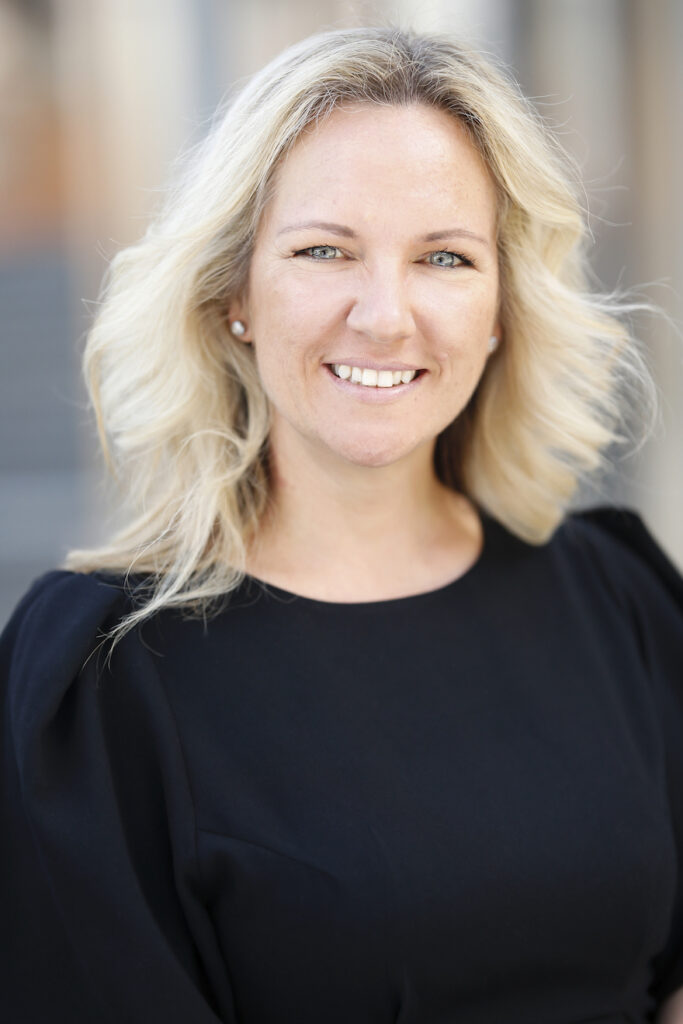
When founder Bourby Webster steps away from the Perth Symphony Orchestra, she’ll take with her fond memories of music-making and a sense of regret that her adopted state still lacks a genuine embrace of the arts.
Her critical views come later in a wide-ranging conversation over coffee, in which Webster reflects on her decade as musical impresario, fundraiser and seemingly indefatigable advocate for the orchestra she created.
She remains a passionate fan of Perth and Western Australia, where she has lived since 2000. And this ex-viola player from the electric girl band Bond in the UK has clearly savoured every step in the adventure that began in 2008 when she started compiling a list of her favourite Perth musicians.
In 2011, she achieved her dream when PSO gave its first performance in a brilliant outdoor concert at the University of Western Australia. Webster had assembled the orchestra from scratch at a time when only the West Australian Symphony Orchestra was offering musicians regular ongoing work and a professional’s salary.
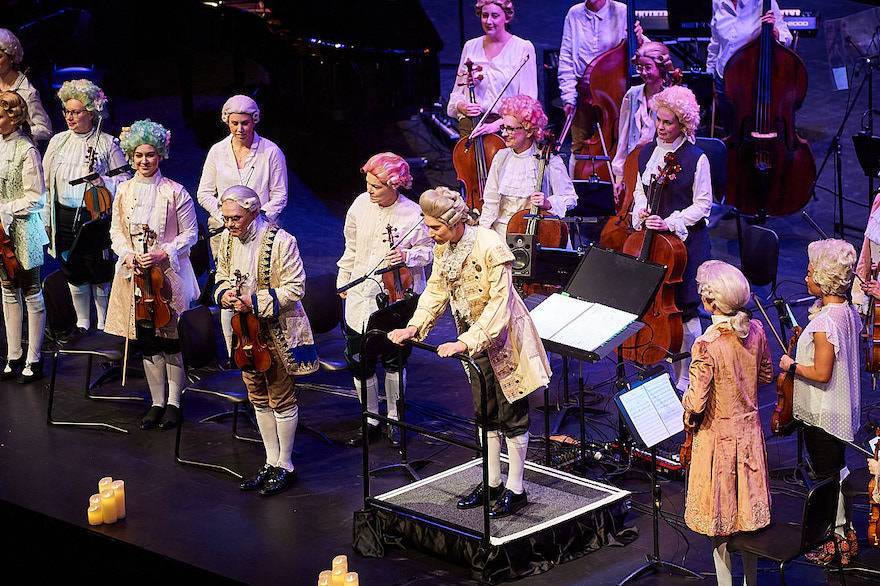
Perth Symphony now has a pool of 220 players on its books, from music teachers to fulltime musicians. It performs as many as 100 gigs a year, including six to 10 major themed concerts.
“Each is planned from scratch and music written or adapted, and in every program we have a new work by a West Australian composer,” she says.
Now Webster has called time on her role as CEO, gratefully handing over to former WA Ballet executive Catherine Henwood in June but continuing in a part-time role to secure next year’s funding before leaving entirely.
“It’s the hardest call I’ve ever made, the fear of letting go of an organisation I’m most proud of,” she admits. “It’s a massive identity crisis, even the way I introduce myself! But I knew the orchestra was going to need a fresh pair of eyes and very capable hands like Catherine’s. I’ve got loads of ideas still, and there are other things I’d like to see happen.”
Webster has already created Women on the Podium, a ground-breaking initiative to address the struggle women have breaking into conducting. It has enhanced the careers of 30 women, some of whom are now sought-after conductors.
But Webster’s special gift has been to inspire community leaders to take a risk on classical music. Like the City of Kwinana. “The council took a leap of faith and I love them for that,” she says. “The word was ‘if it’s a Jimmy Barnes concert, OK, but nobody’s going to come for an orchestra’. The head of events admitted they had no idea how to market an orchestral concert!
“I said ‘have faith, you’ll be surprised how many people play video games listening to orchestral soundtracks. They love Star Wars, and everyone knows the Game of Thrones theme.’
“In fact, 5000 people turned up to that first concert in Kwinana. We discovered the City has almost 30 percent of people with Indian heritage, so we found some local Indian dancers and got them up on stage. We did Bollywood arrangements alongside Star Wars, and everyone stepped up to join their neighbours dancing. The spirit was ‘we are one, and music is great’.”
When Perth Symphony was hired to perform at the West Australian of the Year Awards, they performed a Birds of Tokyo song in honour of Fremantle’s home-grown band. But there was a twist, explains Webster.
“We arranged it for world instruments to play in the order in which people arrived in Western Australia. We started with a didgeridoo, then Irish instruments, then Malaysian, and so on. We found brilliant musicians from each of those communities to take part. Then the seven-minute intro to this Birds of Tokyo song ended with (lead singer) Ian Kenny coming out and singing.
“There were incredible conversations backstage between all the musicians – they learned about each other’s instruments. And that’s the heart and soul of what makes us different. It’s electrifying for a community to feel proud, and only the arts and music can genuinely fulfil that need.”
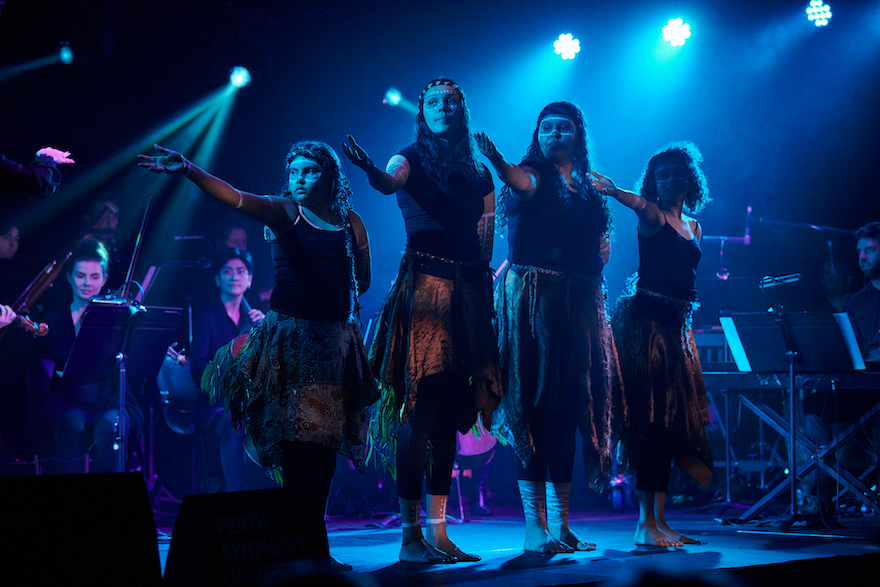
Perth Symphony has grown enthusiastic audiences for orchestral concerts across the state. Meanwhile, Webster has won a dozen accolades for her work, culminating in 2019 with her selection as West Australian of the Year in the arts and culture category.
Yet she says even a successful orchestra like hers faces the dilemma of many West Australian cultural organisations – a huge, demonstrably effective ambition let down by lack of core funds.
“I’ve created a symphony orchestra that turned over just under $2.5m last year. We’re grateful for our State Government funding of 4.5 percent, which pays for one staff member that we wouldn’t otherwise have. But it is never going to be remotely sustaining.
“Every cent it costs to put on our concerts has to be charged to somebody. One council told us they had to put the concerts out to tender, and we lost because we weren’t the cheapest. I said ‘please don’t let money stop us – we need your ambition’.”
WA in need of an artistic vision
With a hint of frustration, Webster says: “The one thing I haven’t seen in the 22 years I’ve lived here is the artistic vision for this state. And that comes down to leadership – if the government could invest in the arts significantly, there would be a huge return in health, tourism, community, identity. But they’re not showing leadership or having conversations about investing more.”
Instead, she says, the state’s cultural institutions are increasingly forced to go cap in hand to resource companies for money. “I feel sorry for the miners that they feel under immense pressure to fund every goddamn arts company in the state.
“I love all the new companies emerging, from Freeze Frame Opera to Perth-based Australian Baroque ensemble or Aquinas College’s choir Schola Cantorum. There’s so much energy here, yet unlike any other local industry, they are not remotely rewarded or invested in to flourish.”
Webster says the public narrative needs to change. “We haven’t got arts embedded in the culture of this state and people have not grown up thinking ‘this is an essential part of my life’.
“Arts events are as common as football but nobody talks about it, either in government or media. Nobody knows what’s actually taking place here, so people end up thinking arts is a small pocket of soft, warm and fuzzy creative people. Yet I see the hard economics and the social return.”
The problem of cultural invisibility is demonstrated every time she addresses a corporate audience, says Webster. “I say, ‘Can you all put your hands up here who runs a football tipping competition at work?’ Everyone’s hands go up. ‘Whose company organises an annual surf event or lunchtime netball or beach volleyball?’ Everyone. ‘Who’s got a company choir?’ Not one hand. ‘Who’s got an art appreciation group?’ None.”
Changing corporate culture on the cards
She has glimpsed a new career path that may see her working with the corporate sector. “There’s plentiful data about vibrant communities involved in arts activities being instantly predisposed to communicate, collaborate and trust. Your workforce not having multiple sick days. BHP have just asked for ideas about how to enliven mine sites and create connection. Obviously, they’ve got massive issues right now, among them sexual harassment. And I’m like ‘well, have you got them singing together, doing a production together? Have you run a mini-festival on a mine site?
“Can we not see that our corporate behaviour is literally shaping how we see the world? There is no encouragement for employees to connect through creativity, inspiration and joy.
“Until we pay massive attention to that in the corporate workplace, we can’t have the massive impact through the arts. This is what I hope my future is – to transform an organisation, because we’ve transformed communities through Perth Symphony.”
Webster has an apocryphal story about the attitude of officialdom to the arts. It’s one that curiously emerged over Perth Symphony’s involvement in an eye-catching landmark, the Matagarup Bridge, which forms the outline of entwined swan figures rising above the Swan River, or Derbarl Yerrigan.
She says the orchestra was engaged to work with First Nations elders on a soundtrack of stories and music that would evoke a response in visitors walking across the bridge.
“The plan was for a sophisticated speaker system that would carry the sound across the length of the bridge. But right at the end, due to money problems, not only did they take the music that was supposed to be heard on both sides of the bridge to just one side, but only two microscopic speakers were installed.
“Now the only way of hearing all of that investment is to stick your ear against one pillar and you’ll hear some tiny bits of scratchy music. I feel like going along at night and painting ears on the pillars so people know about the sound.”
She says it’s emblematic of the current state of the arts in Perth. “It would literally have taken another couple of thousand dollars to do it properly,” she concludes. “To say ‘it doesn’t matter, we’ll shave that bit off’ is a giant metaphor for the whole arts scene. It sends a signal – what lives and breathes on that bridge are the stories that make it more than a crossing, an experience, an attraction.
“It would have turned Matagarup Bridge into a place where people stop and dwell and learn and grow.”
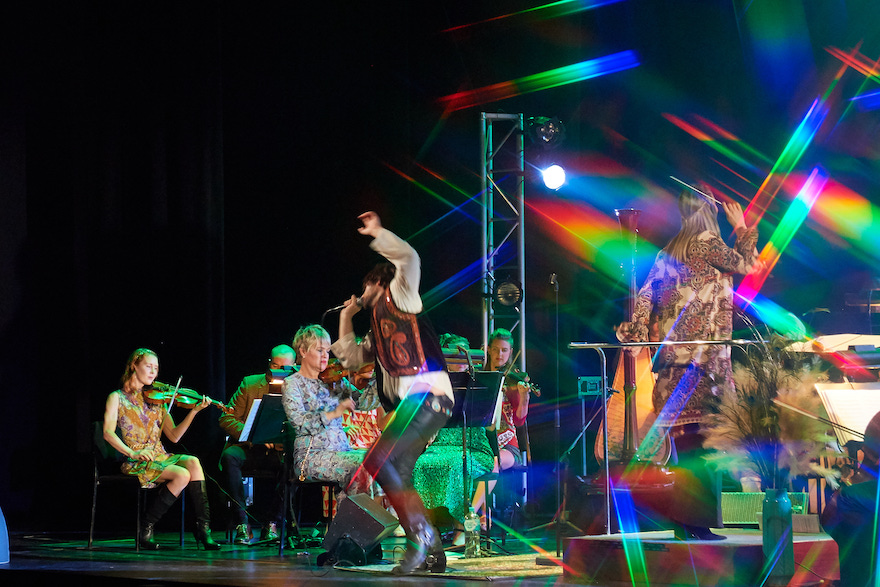
Pictured top: Perth Symphony Orchestra performs Prince to a rapturous reception. Photo: Daniel Carson
Like what you're reading? Support Seesaw.

Past Articles
Arts funding lost in translation
With peak bodies hit hard in the State Government’s latest funding round, Victoria Laurie looks at the cost for the arts and some of its biggest advocates.
Climate concern drives dance odyssey
The urgent need for climate action lies at the heart of choreographer Annette Carmichael’s ambitious five-chapter work, which traverses 1000 km to blur the line between performance and road trip. Victoria Laurie gets the lowdown.